
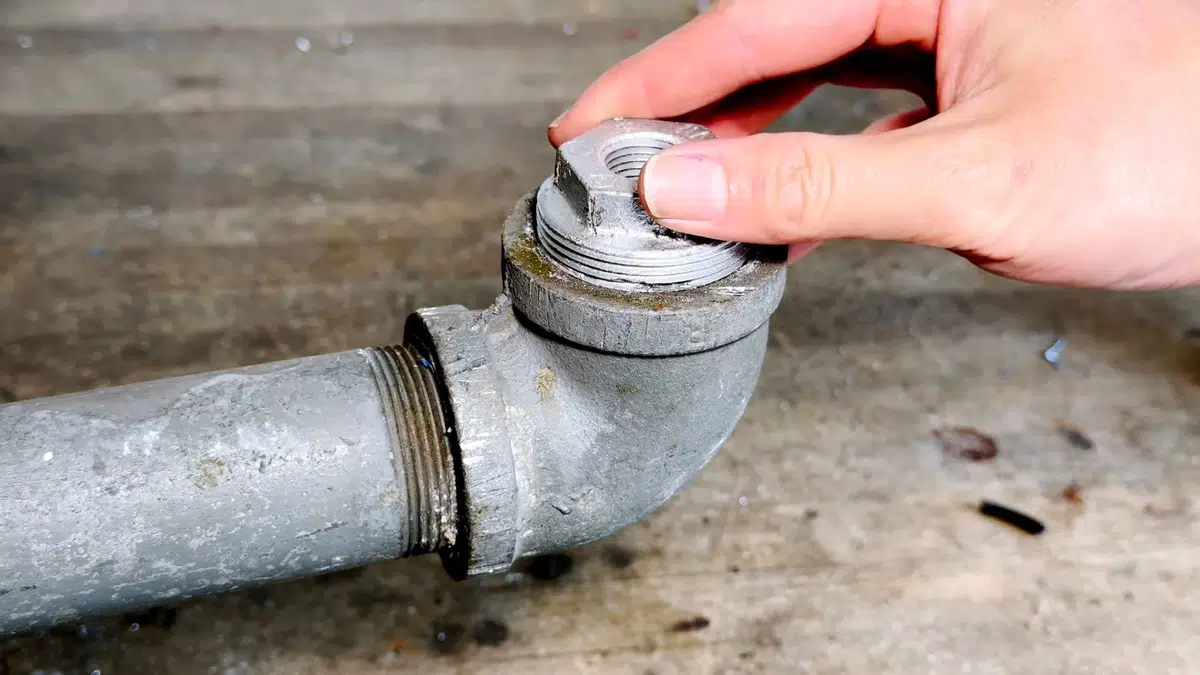
Old Town Monrovia is full of beautiful early-twentieth-century homes, and many of them still carry their original water supply lines. Those lines are galvanized steel, the standard of the day, and after roughly a century in the ground and the walls, galvanized has a way of failing that is both predictable and frustrating. Knowing the signs lets you plan a repipe before a failure plans it for you.
Why galvanized pipe fails
Galvanized steel pipe is iron coated in a layer of zinc to resist corrosion. That coating buys decades, but it does not last forever. Once the zinc wears away, the steel underneath starts to rust from the inside out, and two things happen at once: the pipe slowly closes up with corrosion, and the walls grow thin and brittle at the threaded joints.
In Old Town's homes, that pipe is now 90 to 120 years old. It has long outlived the zinc, and Monrovia's very hard water has only sped the process along. So the question for most of these homes is not whether the galvanized is failing, but how far along it is.
The signs your galvanized pipe is failing
Rusty or discolored water
The clearest sign is brown or yellowish water, especially first thing in the morning or after the house has sat unused. That color is rust shedding from the inside of the pipe. If it clears after a few seconds and then returns the next morning, the corrosion is well underway.
Water pressure that has faded
As corrosion narrows the inside of the pipe, less water can pass through, and pressure drops across the whole house. It happens so gradually that many homeowners do not notice until a guest mentions the weak shower, or until they compare it to a friend's newer home. Whole-house low pressure, as opposed to one slow fixture, is a classic galvanized symptom.
Pinhole leaks that keep appearing
When the pipe walls grow thin, they start to weep at the weakest points, usually the threaded joints. A pinhole leak inside a wall or under the house may show as a stain, a musty smell, or a spot of damp drywall. The telling part is repetition: fix one, and another appears somewhere else, because the whole system is failing at a similar rate.
A burst that forces the issue
Sometimes the first real warning is a burst. A corroded joint finally gives way, and suddenly water is where it should not be. We cover what to do in that moment in our pipe-burst guide, but the lesson afterward is usually the same: if the galvanized is bursting, the rest is not far behind.
Why patching stops making sense
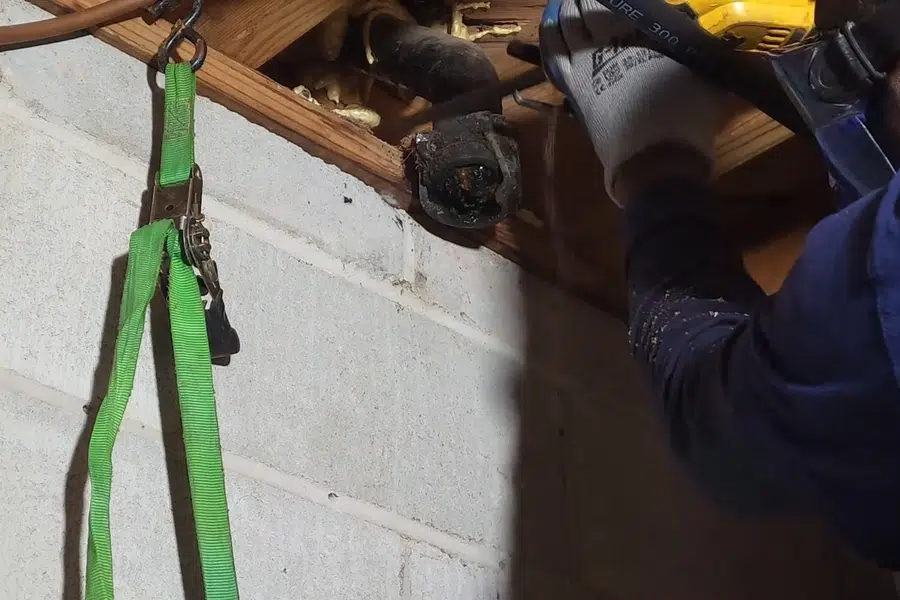
The hard truth about galvanized is that repairs are temporary. Replacing one failed section puts new pipe next to old pipe that is corroding at the same rate, so the next leak is only a matter of time. Homeowners often spend more, over a few years of emergency repairs, than a planned repipe would have cost in the first place.
There is also the insurance angle. Insurers have grown wary of galvanized plumbing, and a history of leak claims or known galvanized lines can complicate coverage. A repipe turns an aging liability into a modern, reliable system. For many homeowners, that reassurance, knowing the water lines are no longer a question mark every time it rains or the pressure dips, is worth as much as the improved water itself.
What a heritage repipe involves
A whole-home repipe replaces the supply lines throughout the house, usually with PEX, which is flexible, resists hard-water scale, and installs with minimal wall opening. In an Old Town bungalow, the key is doing it with care: routing new lines through the crawlspace and attic to keep wall openings few, patching access points cleanly, and respecting the home's character. On a Mills Act or landmark home, that care extends to preserving protected features, which we cover in our Mills Act plumbing post.
If you are weighing materials, our comparison of PEX and copper for a heritage repipe lays out the trade-offs. For most Old Town homes, a careful PEX repipe is the practical, lasting answer.
The bottom line
If your Old Town bungalow shows rusty water, fading pressure, or repeat leaks, the galvanized has likely reached the end of its life. A repipe is a one-time project that resets the clock for decades, and done right, it leaves your home looking exactly as it should. We are glad to assess your system and tell you honestly how far along it is.
Frequently asked questions
How long does galvanized pipe last?
Galvanized typically lasts several decades, but in Old Town Monrovia it is now 90 to 120 years old, well past its lifespan, and the very hard local water has accelerated the corrosion. Most of these homes are due for a repipe.
Can I just replace the bad section instead of repiping?
You can, but it rarely pays off. New pipe next to old galvanized that is corroding at the same rate means the next leak is close behind. Many homeowners spend more on repeat repairs than a planned repipe would have cost.
Will repiping damage my historic home?
Not when it is planned carefully. We route new lines through crawlspaces and attics to minimize wall openings and patch the access points we do make, with extra care on landmark and Mills Act homes.